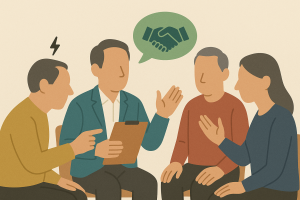
Mediation is a structured and voluntary process used to resolve workplace conflicts through dialogue and collaboration. In mediation, a neutral third party helps employees or teams openly discuss their issues, explore common ground, and develop mutually beneficial solutions.
The process emphasizes understanding, fairness, and confidentiality, giving participants the freedom to communicate openly without fear of judgment or retaliation.
Types of Workplace Mediation
Interpersonal Mediation
This type of mediation addresses conflicts between individuals, often arising from personality differences, communication challenges, or misunderstandings.
Common examples include:
- Personality clashes
- Miscommunication or perceived disrespect
- Feelings of unfair treatment between coworkers or between supervisors and employees
Team Mediation
Team mediation focuses on resolving conflicts that affect multiple employees or entire teams. It works to improve team cohesion, clarify roles, and enhance communication and productivity.
Typical situations involve:
- Disagreements about project direction
- Unclear roles or responsibilities
- Competition for resources or recognition within the team
Workplace Bullying Mediation
Designed to address behaviors such as harassment, intimidation, or repeated disrespect, bullying mediation seeks to create accountability and restore dignity in the workplace.
It is used in cases involving:
- Harassment or threats
- Persistent verbal or emotional abuse
- Patterns of negative interactions that harm employee well-being
Management and Leadership Mediation
Conflicts between leaders or managers often stem from differences in leadership style, decision-making, or communication practices. Leadership mediation aims to foster collaboration and clarify expectations at higher levels of the organization.
Common examples include:
- Conflicting management approaches
- Disputes over strategic decisions
- Breakdowns in communication among leadership teams
Discrimination and Equality Mediation
This type of mediation focuses on addressing workplace conflicts involving unfair treatment based on race, gender, religion, age, disability, or other protected characteristics. The goal is to foster fairness, equity, and inclusivity.
Typical situations include:
- Concerns about discriminatory hiring or promotion practices
- Allegations of unequal treatment based on protected characteristics
- Addressing deeper systemic issues within organizational culture
Benefits of Workplace Mediation
Organizations that embrace mediation often experience:
- Improved communication and stronger working relationships
- Greater workplace harmony and increased productivity
- Lower levels of stress and interpersonal conflict
- Enhanced employee morale, satisfaction, and retention
When to Use Mediation
Mediation is most effective when conflicts are addressed early, before they escalate.
Employers, HR professionals, and employees themselves can initiate mediation to maintain healthy workplace relationships and prevent long-term damage to team dynamics.
By understanding the different types of workplace mediation and using them appropriately, organizations can foster a more respectful, cooperative, and productive working environment for everyone involved.