Conflicts over property lines, fences, trees, or shared spaces can strain relationships between neighbors and sometimes lead to expensive legal disputes. Mediation offers a constructive, private, and cost-effective alternative that helps preserve both neighborly ties and community harmony.
Understanding Property and Boundary Mediation
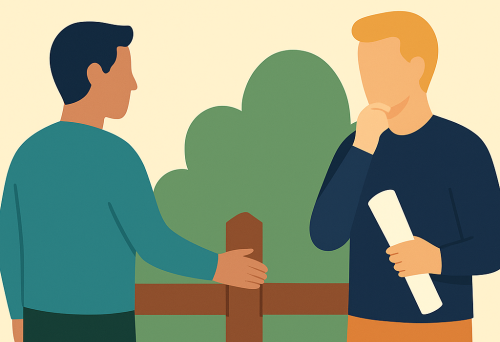
Property and boundary mediation involves a neutral third party who assists neighbors in conflict. The mediator helps each party voice their concerns, understand one another’s viewpoints, and work together toward an agreement that satisfies both sides.
Common Issues Addressed Through Mediation
Several types of disputes frequently arise between neighbors, including:
Fences and Property Lines
Arguments over fence placement, maintenance responsibilities, or the exact location of property boundaries.
Trees and Vegetation
Concerns about overhanging branches, falling leaves, or roots that invade neighboring properties.
Shared Driveways or Access Paths
Disputes over usage rights, maintenance duties, or access to shared spaces.
Encroachments
Issues related to structures, gardens, or landscaping that cross onto a neighbor’s land.
Easements and Rights-of-Way
Disagreements about access rights through another person’s property.
Why Choose Mediation?
Mediation offers several clear advantages:
Cost-Effective
Often free or low-cost, particularly when provided through community-based services.
Confidential
Mediation sessions remain private, unlike public court proceedings.
Relationship Preservation
By promoting cooperation and understanding, mediation helps neighbors maintain positive relationships.
Flexible Agreements
Mediation allows neighbors to craft personalized solutions suited to their unique situation.
Faster Resolutions
Disputes can often be resolved more quickly through mediation than through traditional litigation.
Real-World Examples of Mediation Success
Fence Dispute
Two neighbors disagreed about the placement of a newly installed fence. Mediation helped them review property surveys, and they reached an agreement to move the fence to the correct boundary. They also agreed to share the cost of relocation.
Tree Encroachment
A homeowner concerned about overhanging branches from a neighbor’s tree used mediation to settle the matter. Both parties agreed that the tree owner would trim the branches regularly, and they established a schedule for maintenance.
Shared Driveway Conflict
Neighbors sharing a driveway argued over snow removal responsibilities. Mediation led to a written agreement outlining a rotation schedule and cost-sharing plan for upkeep.
Starting the Mediation Process
If you are facing a property dispute, consider taking the following steps:
Contact a Mediation Center
Reach out to a local mediation service or community dispute resolution center.
Agree to Participate
Both parties must consent to take part in the mediation process.
Schedule a Session
Set up a time and place that works for everyone involved.
Prepare for the Meeting
Gather documents, surveys, photos, or other information that can help clarify the dispute.
Mediation provides a peaceful and practical way to settle property and boundary disputes. By encouraging open communication and mutual respect, mediation helps neighbors find workable solutions and maintain a positive living environment.